
The DIRE Framework
The foundational definition that informs the basis of the Challenge Enthusiasts site.
What is DIRE?
Definition
DIRE stands for Developer Intended, Recognized, or Encouraged, and is the fundamental principle behind what the site aims to catalogue.
The CE website aims to catalogue all DIRE challenges within games that meet a minimum threshold of difficulty.
This threshold and the exact definition of "difficulty" are often debated and highly subjective. However there are some generally agreed upon facts.
- #1: Difficulty is some combination of time and effort.
- #2: Dark Souls is harder than Cookie Clicker.
It is from these foundational truths we look to establish the most complete listing of (DIRE) gaming challenges.
DIRE info and examples
Typically the 'intended' and 'recognised' components of DIRE are less ambiguous, but, for completeness, each component is further detailed below.
Developer Intended
Developer-intended covers elements explicitly included in a game. This may come in the form of:
- Completion of the game itself (where a finite end exists)
- Beating in-game times on individual levels set out within the game
- Finishing a challenging mode that is unlocked after first completion of the game (eg: a higher difficulty, etc)
Examples include:
Touhou Bunkachou ~ Shoot the Bullet.: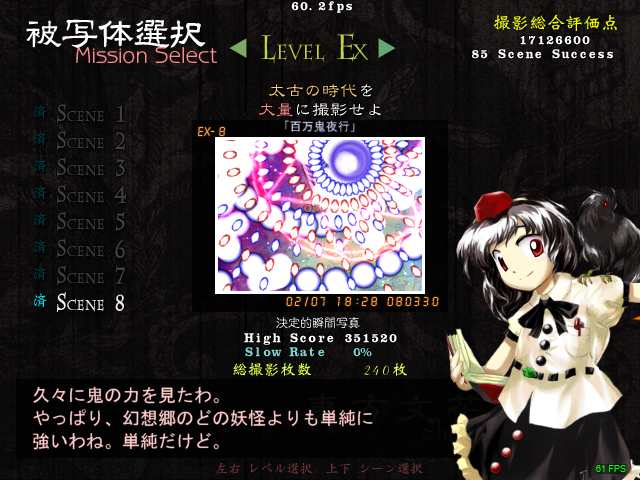 The developer included 85 scenes - completing them all is developer intended.
Dispersio 2: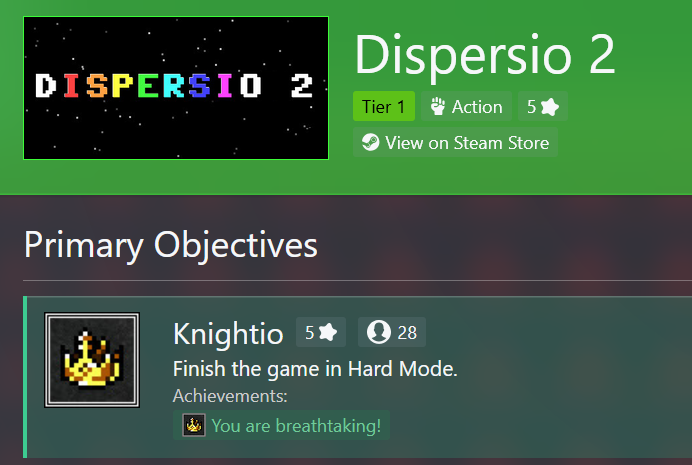 The developer has created the game; beating the final boss on the highest difficulty is a developer intention.
Developer Recognised
Developer-recognised elements of a game are those where something is provided to the player for accomplishing a feat.
This may come in the form of:
- A Steam achievement (as these are set by the developer), or equivalent achievement on an alternate game platform (eg: Ubisoft Connect achievements for Trials Rising)
- Achievements on the RetroAchievements (RA) platform do not in and of themselves represent developer recognition, as the achievements are (typically) set by 'RA developers' not associated with the original game.
- To the extent that an RA achievement aligns with items intended / recognised / encouraged by the original developers though, these can be used as a proxy for a feat's completion.
- In-game unlocks or rewards (eg: a new character skin, a medal next to your in-game profile, a new title screen background)
- Unique text for completion of a feat, although how it is presented can impact what type of objective it may be listed as on the site.
Examples include:
Hatsune Miku: Project DIVA Mega Mix+: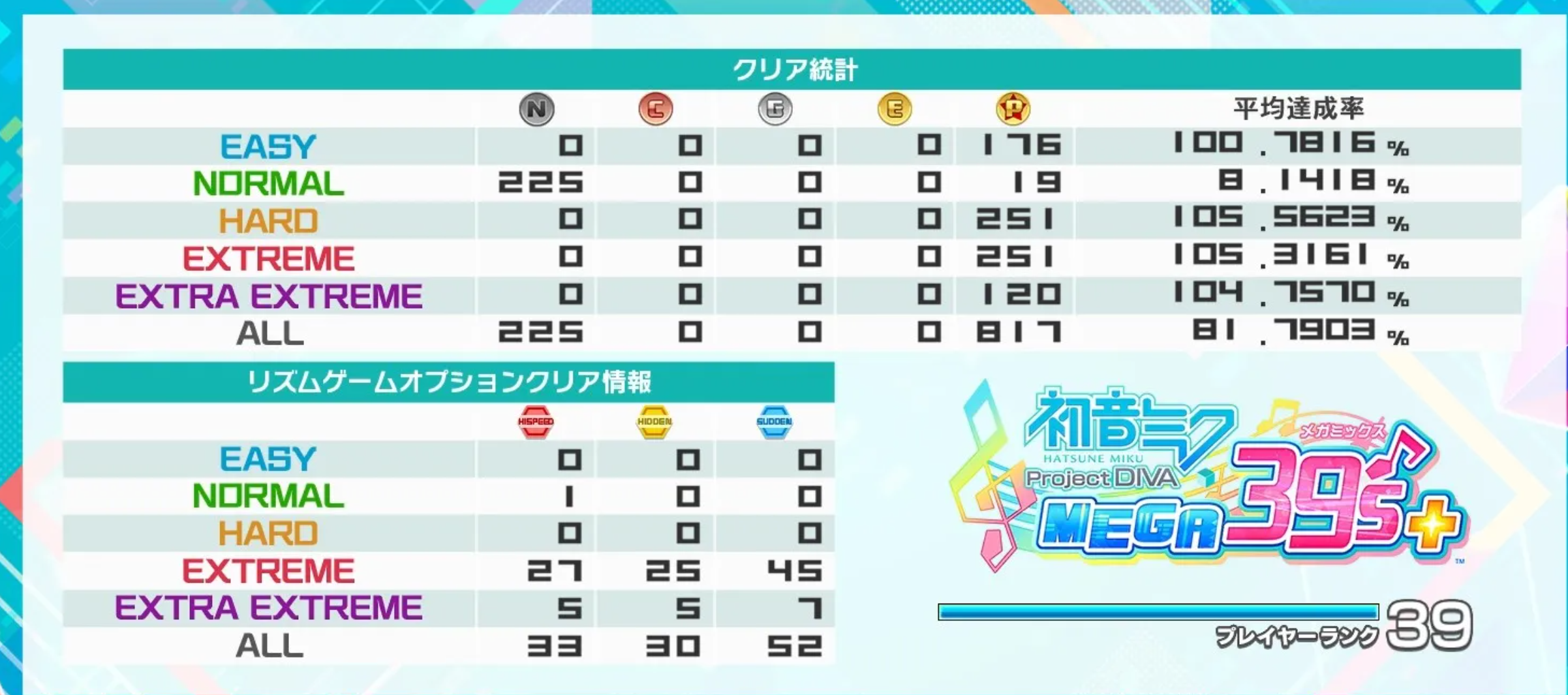 A results screen tabulates all ranks achieved, by difficulty.
Gurumin: A Monstrous Adventure: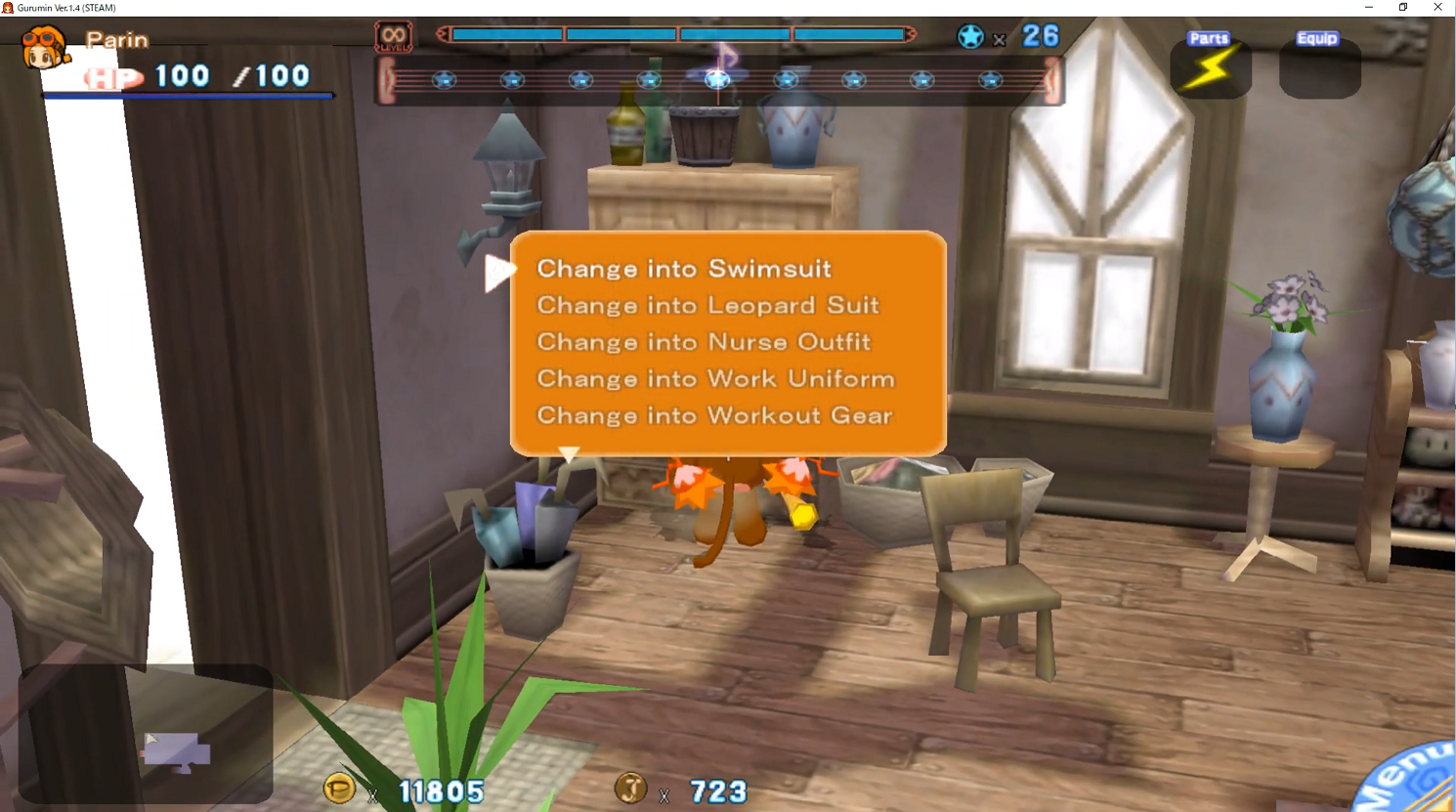 Beating the Boss Rush on the highest difficulty unlocks a unique costume ('Swimsuit').
Crypt of the NecroDancer: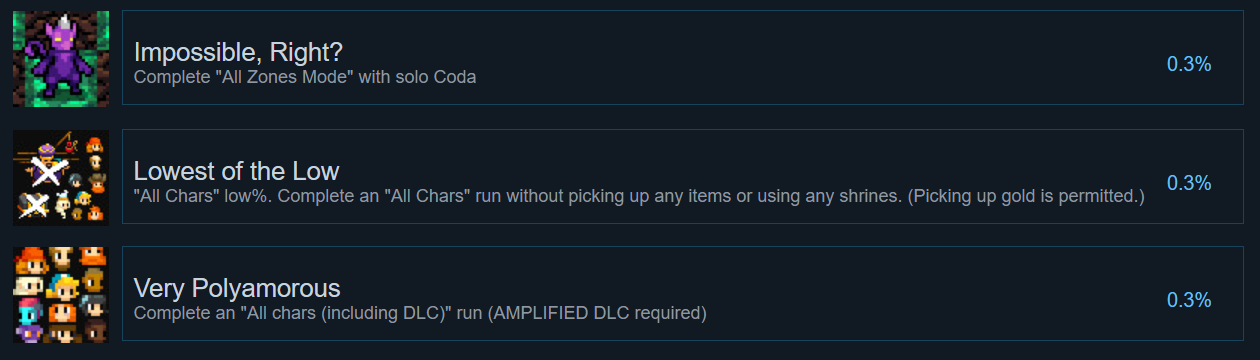 Achievements exist for three very different, and very difficult, runs.
Developer Encouraged
The 'encouraged' component of DIRE is arguably the least clear-cut.
Developer encouragement may come in the form of:
- Comments written within a game's manual
- Text within credits (eg: "Bet you couldn't beat it under 100 deaths; we couldn't!")
- Fixed target times/scores without a reward associated with their being beaten
- Where and how the the time/score is presented may impact whether it listed as a Primary or Secondary objective.
- Being displayed prominently through regular gameplay, or frequent exposure in a user interface which is encountered regularly and consistently throughout the game, would likely see it listed as a Primary Objective.
An example of a developer-encouraged challenge is the game BAIONLENJA: 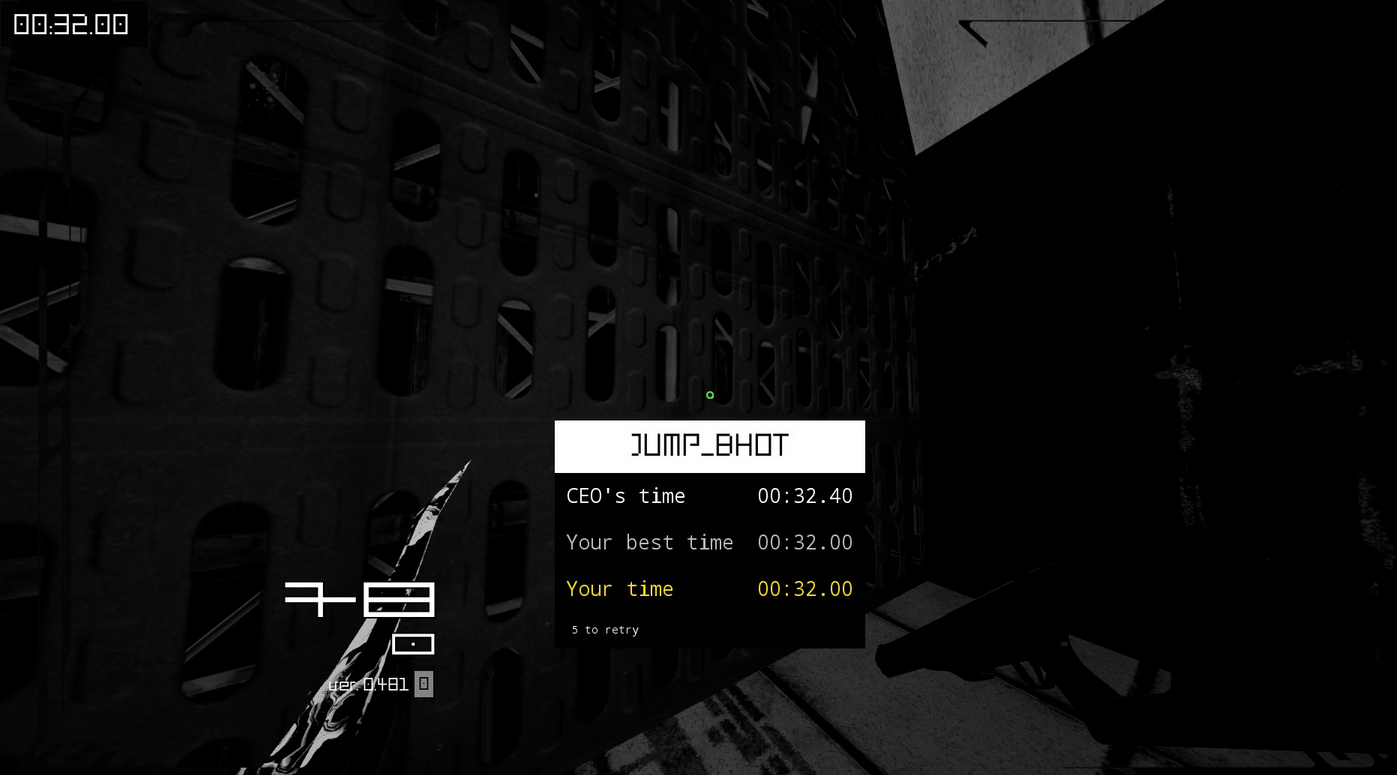
The end of each level has a 'CEO time' shown - beating it has no in-game, nor Steam achievement, recognition. However, it is displayed prominently at the conclusion of each level, which acts as an explicit form of encouragement.
What isn't developer encouragement?
Where a challenge is implied or referenced by a character within the game (irrespective of whether that implication or reference is made in-character [eg: boasting/gloating], tongue-in-cheek, portrayed as a joke, or made in passing), and where the developer does not provide a reward/recognition for accomplishing the challenge.
Examples include:
A Hat in Time: The language used is overtly tongue-in-cheek, and emphasised as being a joke by the last two sentences. This does not meet the criteria of 'Developer Encouraged', and fails the Intended/Recognised tests as well.
Donkey Kong Country: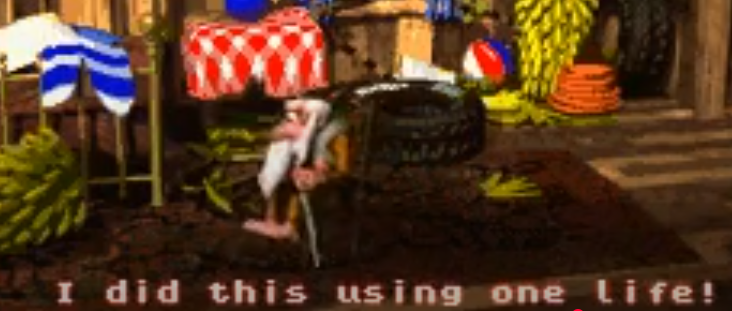 Cranky Kong is boastful throughout the game, commenting on his gaming prowess, and one such dialogue line is shown above. The character is gloating, in line with their portrayed personality, and absent any recognition for the feat in-game (or an explicit encouragement from the developer in the instruction manual, for example), this does not meet the criteria of 'Developer Encouraged'.
Challenges outside of DIRE
We recognise, however, that there are challenges which exist beyond those intended / recognised / encouraged by the developer.
This may come in the form of:
- game modifications (see: Map Packs for N++)
- user-generated content (see: Geometry Dash levels)
- community-set challenges (see: Neon White community medal times)
- self-imposed restrictions recognised by the community (see: A Hat in Time - Death Wish restrictions).
In each case, these can be recognised as Community Objectives, but as they do not fit the DIRE criteria, they will not have points associated with them on the site.